

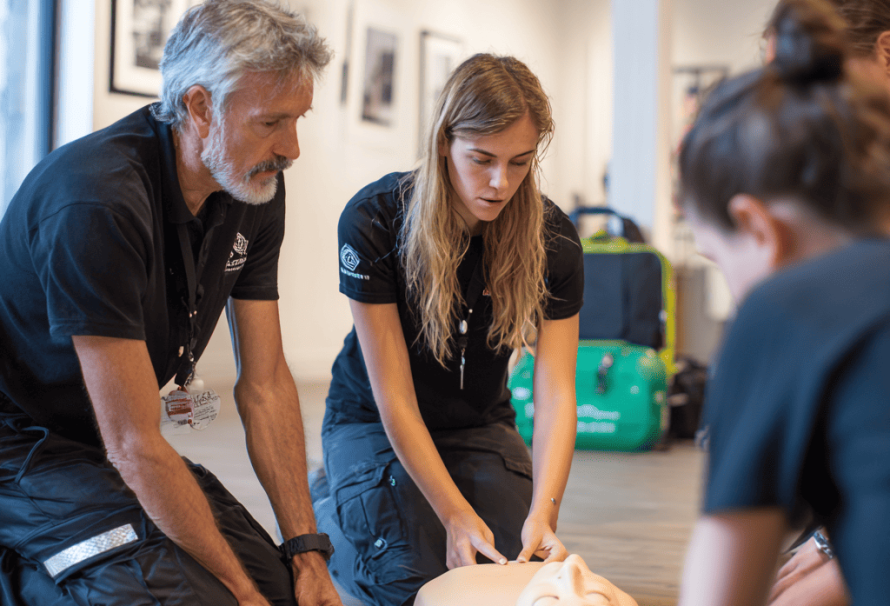
We often talk about physical first aid with reverence and relief. Knowing how to stop bleeding, perform CPR, or clear a blocked airway feels like carrying a superpower in your back pocket. But there is another kind of emergency that happens every single day—quieter, less visible, but just as urgent. A friend stops answering texts. A coworker’s jokes turn suddenly dark. A family member seems to be drowning in silence. In those moments, most people want to help but have no idea what to say. That uncertainty is not a character flaw; it is a skill gap. And the good news? That gap can be filled with warmth, training, and confidence. Whether you enroll in First Aid courses Rochdale or a mental health program in your own community, learning to support emotional well-being transforms you into an everyday hero of the heart. And the confidence you gain? It will change your relationships, your community, and even yourself.
Mental health first aid is not therapy. It is not diagnosis. It is simply the art of noticing, listening, and guiding someone toward professional help before a crisis escalates. And here is the beautiful truth: anyone can learn it. You do not need a psychology degree or years of experience. You just need a willing heart and a few practical tools.
The Hidden Crisis Of Feeling Helpless
 Think about the last time someone close to you seemed really down. Maybe they said something worrying, or maybe they went quiet in a way that felt heavy. What did you do? If you are like most people, you probably wanted to help but felt paralyzed. What if you say the wrong thing? What if you make it worse? What if they push you away?
That fear is incredibly common, but it is also incredibly painful—for both of you. The person struggling senses your hesitation and feels more alone. You walk away feeling useless and guilty. No one wins.
Mental health first aid training dissolves that paralysis. It replaces “what if I mess up?” with “here is exactly what to say.” It turns a scary, awkward moment into a calm, connected conversation. And that shift is nothing short of liberating.
One graduate of a mental health first aid course described it this way: “Before the training, I avoided deep conversations with friends who were struggling. I was terrified of saying the wrong thing. After the course, I actually look forward to being there for people. I know how to ask, how to listen, and how to help them find resources. The fear is gone. All that’s left is compassion.”
That is the confidence boost you did not know you needed. Not loud or flashy, but steady and warm. The confidence to sit with someone in pain without running away.
What You Actually Learn (And Why It Feels So Good)
Mental health first aid is surprisingly practical. You learn a simple action plan that fits on one page, often remembered by the acronym ALGEE:
-
Assess for risk of suicide or harm – You learn gentle, direct questions that save lives without causing offense.
-
Listen non-judgmentally – You practice the art of silence, reflection, and validation without fixing or minimizing.
-
Give reassurance and information – You learn to say things like, “It makes sense you feel this way, and help is available.”
-
Encourage professional help – You become a bridge to therapists, hotlines, and support groups.
-
Encourage self-help and support networks – You help people reconnect with exercise, sleep, social connections, and small daily wins.
None of these steps require heroism. They require presence, kindness, and a little bit of practice. And the more you practice, the more natural it becomes. Soon, checking in on a friend’s mental health feels as routine as offering a bandage for a scraped knee.
The Ripple Effect Of One Trained Person
Here is where the magic multiplies. When you become mentally healthy first aid certified, you do not just help one person. You change the emotional climate of every room you enter. Friends start confiding in you because they know you will not panic. Coworkers feel safer because you notice when someone is struggling. Family members breathe easier because they know you will listen without judgment.
That ripple effect is enormous. Studies show that people trained in mental health first aid are more likely to:
-
Recognize early warning signs of depression, anxiety, and psychosis
-
Intervene before a crisis leads to self-harm or hospitalization
-
Reduce stigma by speaking openly and compassionately about mental health
-
Take better care of their own emotional well-being
Yes, you read that last point correctly. Learning to support others also teaches you to support yourself. You become more aware of your own stress, more willing to seek help, and more forgiving of your own struggles. That is the beautiful paradox of mental health first aid: in learning to save others, you save yourself too.
Everyday Scenarios Where You Become The Hero
Let us make this real. Here are everyday situations where mental health first aid transforms you from a helpless witness into a calm, capable ally:
The coworker who seems “off” – You notice they have been irritable and withdrawn for weeks. Instead of avoiding them, you find a quiet moment and say, “I have noticed you seem different lately. I am not here to fix anything, but I want you to know I care. Is there anything you want to share?” That simple invitation can change a life.
The teenager who posts dark things online – You see a worrying social media post from your niece. Instead of panicking or scrolling past, you send a private message: “That sounded really hard. I am here if you want to talk. No judgment. No lectures. Just love.” Then you follow the ALGEE steps to gently explore whether she needs professional support.
The friend who stopped showing up – Your normally social friend has declined three invitations in a row. Instead of taking it personally, you drop off soup or send a voice note saying, “I miss you. No pressure to respond. Just wanted you to know you are loved.” That small act of connection can break through isolation like sunlight through clouds.
None of these actions require a cape. They require noticing, caring, and a tiny bit of training. And the confidence you gain from that training makes all the difference.
Breaking The Stigma With Kindness
One of the most beautiful side effects of mental health first aid is its power to break stigma. When you talk openly about checking in on emotional well-being, you give others permission to do the same. Suddenly, “How are you?” becomes a real question, not just a greeting. Suddenly, saying “I have been struggling” becomes an act of courage rather than shame.
That cultural shift starts with individuals like you. Every time you ask a gentle question, listen without judgment, or share your own vulnerability, you make the world a little softer. You create spaces where people do not have to pretend to be fine. And that is not just kind—it is life-saving.
Your Invitation To Become An Everyday Hero
You do not need to be a therapist. You do not need to have all the answers. You just need to decide that you want to be someone who shows up. Someone who notices. Someone who says, “I see you, and you matter.”
Mental health first aid training offers that transformation in a single weekend. It is practical, positive, and profoundly hopeful. It will not make you responsible for saving everyone. But it will make you confident enough to save someone.
So go ahead. Sign up for a class. Invite a friend or family member to join you. Learn the skills that turn fear into connection and silence into support. And then walk back into your life as the everyday hero you were always meant to be—calm, capable, and full of compassion. Because the world does not need more people who look away. It needs more people like you, ready to listen, ready to care, and ready to help someone find their way back to the light.


